



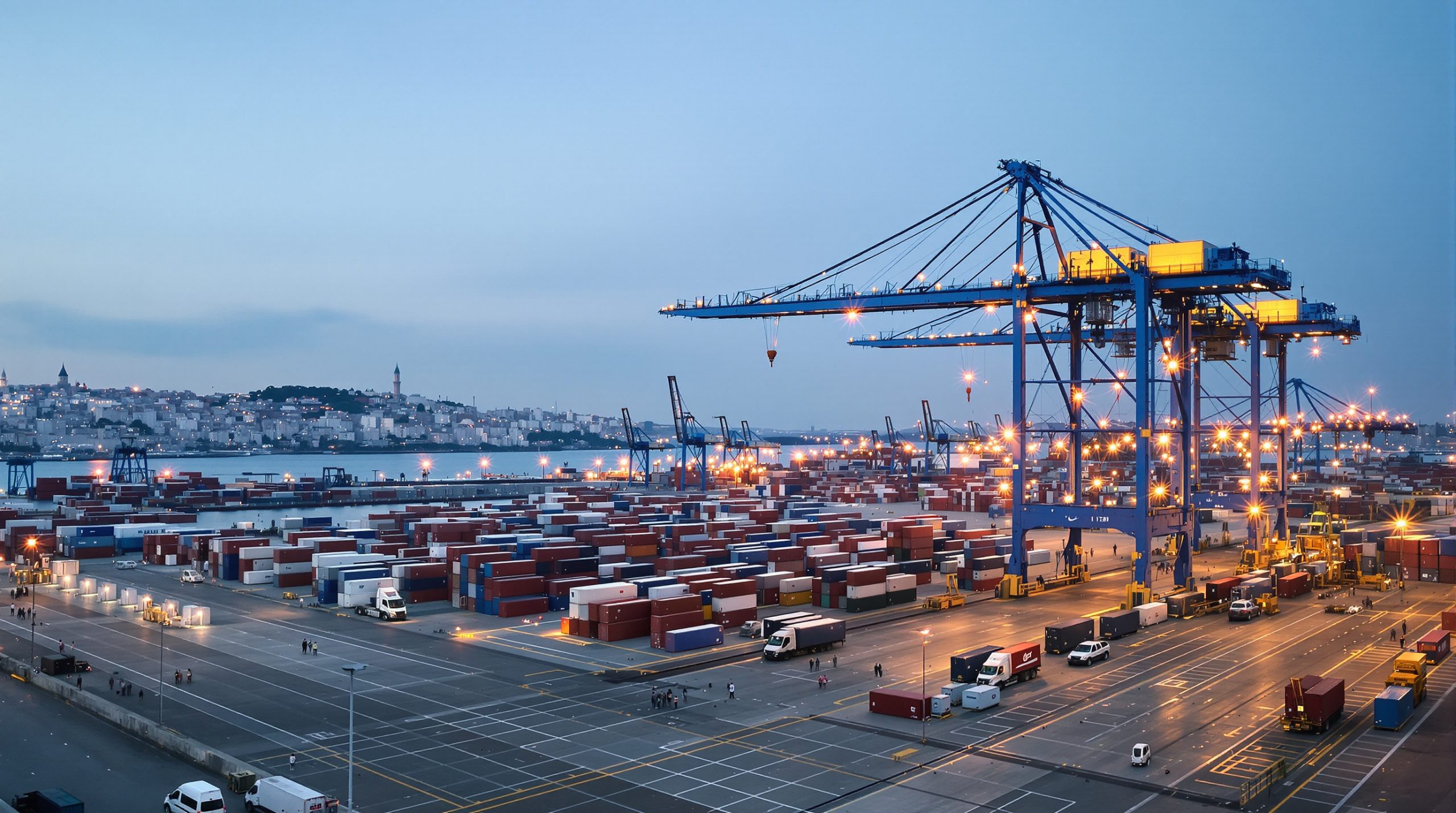
Port operations, free zone activity and cross-border logistics sit at some of the busiest intersections of trade between Turkey and the Middle East. Now that Law No. 7577, published in the Official Gazette on 17 April 2026, has reshaped the earnings exemption for companies manufacturing in free zones, the legal advisory needs of businesses operating in this space go well beyond customs paperwork. Contract drafting, arbitration strategy and debt recovery have all moved to the center of the conversation.
These three areas cannot be considered in isolation. Moving goods produced in a free zone to the Middle East simultaneously raises questions about the goods’ customs status, the carriage contract, and the forum available in the event of a dispute. Below, we look at where these three layers intersect in practice and where particular care is needed.
Why Does the Legal Framework for Free Zones and Port Operations Matter?
Turkey’s free zones operate under Free Zones Law No. 3218 and its implementing regulation. The tax exemption granted to earnings of companies manufacturing in these zones was restructured as of the start of 2026 under the amendment introduced by Law No. 7577. The scope of the exemption needs to be read carefully, however, since earnings from sales into Turkey’s domestic market remain outside this protection.
Consider a company manufacturing in the Mersin or Izmit free zone and shipping its products to Iraq or Saudi Arabia. The accurate determination of the operating license date has a direct bearing on which sales qualify for the exemption. The same company must also handle its bonded warehouse and transit operations under Customs Law No. 4458 with equal care. A customs status error at the point of departure from the port can bring a shipment to a complete halt.
What Risks Are Commonly Overlooked in Carriage and Logistics Contracts?
Take a logistics company shipping a container from Istanbul to Baghdad via transshipment through Jebel Ali. Within this chain, the bill of lading, the charter agreement and, where applicable, the agency agreement may each be governed by a different legal regime. While the maritime trade provisions of Turkish Commercial Code No. 6102 govern the Turkish leg of the journey, operations at the transshipment port or in the destination country remain subject to that country’s own legislation.
Which version of the Incoterms rules applies, and at which delivery point, is often left insufficiently clear in the contract. The delivery point is the critical detail that determines which party bears the risk and cost at any given stage. This ambiguity makes it difficult for the parties to hold one another accountable when damage or delay occurs.
Arbitration Clause or Turkish Courts?
The choice of dispute resolution mechanism in a carriage or agency agreement signed with a Middle Eastern partner carries more weight than it might appear. Turkey’s accession to the 1958 New York Convention generally makes recognition of foreign arbitral awards in Turkey more predictable than recognition of foreign court judgments. Conversely, enforcing a Turkish court judgment in a Middle Eastern country depends on that country’s reciprocity relationship with Turkey and its own procedural rules.
Simply inserting an arbitration clause into the contract is therefore not enough. Details such as the seat of arbitration, the applicable rules and the number of arbitrators determine where the resulting award can later be enforced. International Arbitration Law No. 4686 applies to disputes with a foreign element where the seat of arbitration is Turkey, and the same framework applies when the parties choose its provisions by agreement. There are also situations where litigation is the more suitable route, particularly where one party has a substantial presence in Turkey and mutual enforcement is straightforward. Since parties to port and logistics contracts typically hold assets in different countries, however, a well-drafted arbitration clause more often provides the safer footing.
What Steps Should Be Taken on Payment Delays and Debt Recovery?
When a Middle Eastern distributor fails to pay freight or storage charges on time, the documentation held by the creditor becomes critical. Keeping complete records of the bill of lading, delivery receipts and invoices directly determines how quickly subsequent enforcement or litigation proceedings can move. If the debtor holds assets in Turkey, pursuing enforcement proceedings and debt recovery is generally the fastest option.
If the debtor has no presence in Turkey, the claim may need to be pursued through enforcement and litigation proceedings in the relevant country. At this point, the governing law and the agreed forum or arbitration clause in the contract directly determine where and how the debt can be collected. The care taken over this detail at the time of signing can become an advantage that is impossible to recover once a dispute has arisen.
Why Is Coordination with Local Counsel Necessary?
A Turkish logistics or port company trying to manage its Middle East operations on the strength of Turkish legal knowledge alone is often at a disadvantage. Each country has its own company, customs and arbitration legislation, so the legal structure built on the Turkish side needs to be assessed together with local expertise in the country where operations actually take place. A related discussion looks in more detail at why this kind of coordination in practice requires local legal support.
The model that works in practice is running the drafting of commercial contracts on the Turkish side in parallel with local advisory in the target country. How this approach translates in practice into a working legal partnership for companies is something that should be clarified before the contract is signed.
Conclusion: Which Steps Should Be Taken, and in What Order?
For a company operating in ports, free zones or logistics, a practical roadmap can be built as follows.
- Check license scope and customs status: Clarify in advance the scope of the free zone operating license and which sales qualify for the exemption.
- Contract language and governing law: State the governing law and delivery point clearly in carriage, agency and supply contracts.
- Dispute resolution strategy: Decide between arbitration and litigation from the outset, with an eye to where the resulting award or judgment will need to be enforced.
- Debt recovery mechanism: Keep complete records of bills of lading and delivery documents, and know in advance the course of action for payment delays.
- Local coordination: Assess legal processes in the Middle Eastern country of operation together with the structure built on the Turkish side.
Reviewing these five areas before a contract is signed prevents most of the errors that are difficult to correct retroactively once a dispute arises. Since every case turns on its own facts, a final decision should always be based on individual assessment.
Legal Disclaimer
