


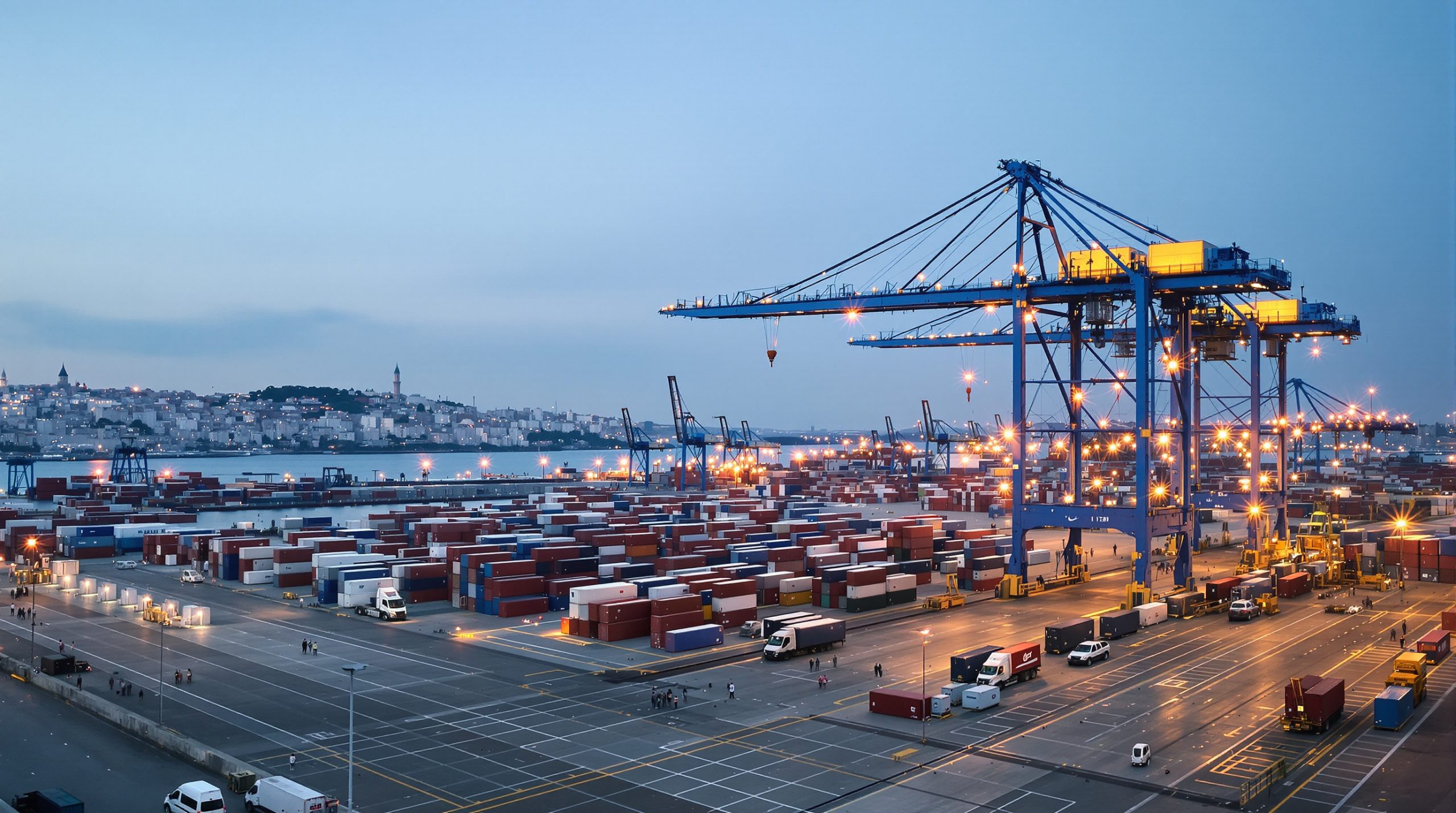
Port operations, free zone activity and cross-border logistics form some of the busiest intersections of trade between Turkey and the Middle East. With Law No. 7577, published in the Official Gazette on 17 April 2026, revising the earnings exemption for companies manufacturing in free zones, the legal advisory needs of businesses operating in this sector are no longer confined to customs paperwork. Contract drafting, arbitration strategy and debt recovery have moved to the center of the agenda.
These three areas cannot be considered in isolation. Moving goods manufactured in a free zone to the Middle East simultaneously engages that good’s customs status, the carriage contract, and the legal remedy to be pursued in the event of a dispute. Below we examine where these three layers intersect in practice and where particular care is required.
Why Does the Legal Framework for Free Zones and Port Operations Matter?
Turkey’s free zones operate under Free Zones Law No. 3218 and its implementing regulation. The tax exemption granted to earnings generated by companies manufacturing within these zones was revised as of the start of 2026 under the amendment introduced by Law No. 7577. However, the scope of the exemption must be read carefully, since earnings from sales made into Turkey’s domestic market remain outside this protection.
Consider a company manufacturing in the Mersin or Izmit free zone and shipping its product to Iraq or Saudi Arabia. Correctly establishing the date of the operating license directly affects which sales qualify for the exemption. The same company must also manage its bonded warehouse and transit procedures under Customs Law No. 4458 with equal care. An error in customs status at the point of port departure can bring the shipment to a complete halt.
What Risks Are Overlooked in Carriage and Logistics Contracts?
Suppose a logistics company loads a container in Istanbul and sends it to Baghdad via transshipment through Jebel Ali. Within this chain, the bill of lading, the charter contract and, where applicable, the agency agreement may each be governed by a different legal regime. The maritime trade provisions of Turkish Commercial Code No. 6102 govern the Turkish leg of the journey, while operations at the transshipment port or in the destination country remain subject to that country’s own legislation.
Contracts often fail to state clearly which version of the Incoterms rule applies and at which delivery point. The delivery point is the most critical detail in determining which party bears the risk and the cost at any given stage. This ambiguity makes it difficult for the parties to hold one another liable when damage or delay occurs.
Arbitration Clause or Turkish Courts?
The choice of dispute resolution mechanism in a carriage or agency agreement signed with a Middle Eastern partner carries more weight than it might appear. The 1958 New York Convention, to which Turkey is a party, generally makes the recognition of foreign arbitral awards in Turkey more predictable than the recognition of foreign court judgments. Conversely, enforcing a Turkish court judgment in a Middle Eastern country depends on that country’s reciprocity relationship with Turkey and its own procedural law.
For this reason, simply inserting an arbitration clause into the contract is not enough. Details such as the seat of arbitration, the applicable rules and the number of arbitrators determine in which country the eventual award can later be enforced. International Arbitration Law No. 4686 applies to disputes with a foreign element where the seat of arbitration is Turkey, and the same framework applies where the parties choose to adopt its provisions. There are also situations where litigation is the more suitable route, particularly where one party has a substantial presence in Turkey and mutual enforcement is straightforward. Since parties to port and logistics contracts typically hold assets in different countries, a well-drafted arbitration clause more often provides the safer footing.
What to Do About Payment Delays and Debt Collection
Where a distributor in the Middle East fails to pay freight or storage charges on time, the documentation held by the creditor becomes critical. Keeping complete records of the bill of lading, the delivery report and invoices has a direct bearing on how quickly subsequent enforcement or litigation proceedings can move. If the debtor holds assets in Turkey, pursuing enforcement proceedings and debt collection is generally the fastest option.
If the debtor has no presence in Turkey, the claim may need to be pursued through enforcement or litigation proceedings in the relevant country. At this point, the choice of governing law and the jurisdiction or arbitration clause set out in the contract directly affects where and how the debt can be recovered. The care given to this detail when the contract is signed can turn into an irreversible advantage once a dispute arises.
Why Is Coordination with Local Counsel Necessary?
A Turkish logistics or port company trying to manage its Middle East operations on the strength of Turkish legal knowledge alone is often insufficiently equipped. Each country applies its own company, customs and arbitration legislation differently, which means the legal structure built in Turkey needs to be assessed together with local expertise in the country where the business actually operates. A separate discussion goes into more detail on why this kind of coordination is needed in practice, addressing why Turkish companies doing business in the Middle East need local legal support.
The model that works in practice is to run the drafting of commercial contracts on the Turkish side in parallel with local advisory in the target country. How this approach translates in practice into a legal partnership for companies is a matter that should be clarified before the contract is signed.
Conclusion: Which Steps Should Be Taken, and in What Order?
For a company operating in ports, free zones and logistics, a practical roadmap can be built as follows.
- Check the operating license and customs status: The scope of the free zone license and which sales qualify for the exemption should be clarified in advance.
- Contract language and governing law: The governing law and delivery point in carriage, agency and supply contracts should be stated explicitly.
- Dispute resolution strategy: Whether to choose arbitration or litigation should be decided from the outset with an eye to where the eventual award or judgment will be enforced.
- Debt recovery mechanism: Bills of lading and delivery documents should be kept complete, with a clear plan in place for how to proceed in the event of payment delay.
- Local coordination: Legal processes in the Middle Eastern country of operation should be assessed together with the structure set up on the Turkish side.
Reviewing these five points before the contract is signed prevents most of the errors that are difficult to correct retroactively once a dispute arises. Since the facts of each case differ, a final decision should be based on individual assessment.
Legal Disclaimer

Comments are closed